Jul 31, 2023

July


How strange that people who try to protect the Planet are called «activists» or «rebels», instead of «protectors» or «carers». Even stranger is that people who deliberately destroy the Planet are called «businessman» instead of «mass murders» or «planetary destroyers». 

Photo by Monica Pinheiro, free to use if you respect the license CC BY-NC-SA (CC).

Jul 30, 2023

July


Made by Mother Earth and Father Time, and Love. Photo by Monica Pinheiro, free to use if you respect the license CC BY-NC-SA (CC).


Jul 19, 2023

July


"Particular attention should be paid to the material used, for good craftsmanship is built on natural foundations, and nature assures the material's quality. (...) When a certain locality is rich in a certain raw material, that material gives rise to a certain craftware. It is this resources, the gift of nature, that are the veritable mother of craftwork." Soetsu Yanagi (2018). The Beauty of Everyday Things.  


Photos by Monica Pinheiro, free to use if you respect the license CC BY-NC-SA (CC).

Jul 18, 2023

July


"When you can see yourself from outside, you contemplate existence with more humility and perceptiveness than when (...) you imagined yourself as the best self, your city as the best city, and what you called life as the only conceivable life." Rafael Argullol cited by Irene Vallejo (2022). Papyrus: the invention of books in the ancient world. Photo by Monica Pinheiro, free to use if you respect the license CC BY-NC-SA (CC).

Jul 17, 2023

July


"It's a strange sort of pain. (...) To die of yearning for something you'll never experience." by Alessandro Baricco (1997). Silk. Painting: gouache and watercolour. June, 2023.


Jul 2, 2023

nearness, seasonality and sustainability


The plants used in my tapestries come from my little garden, are gathered during my walks, or collected during visits to friends and family homes. Some are used right after collection in order to maintain enough elasticity to be worked out. Others are used dried because they offer great flexibility or because they gain other affordances with time. 

Seasonality plays a special role in my tapestries. Not only because plants availability vary according to each month, but also because I like to use daylight when I make them. Each tapestry has the plants of the season and corresponding availability, embedded. If you observe attentively you can guess the seasons they crossed until closure. 

I like to think in sustainability like a verb. The process of discovering ways of make things with what is available. Weaving them into being otherness. Like plants that are considered «invasive». I find it a lack of imagination. A strange classification for bio materials that can thrive in desolate places. Surviving by themselves, without any kind of input or demand on our part, and with their qualities can be transformed in so many beautiful or useful things. 

Weaving the tapestries is a way of giving body (and soul) to my living framework of doing what I know, the best I can, with what I have, wherever I am.

Photo by Monica Pinheiro, free to use if you respect the license CC BY-NC-SA (CC).

navetes

Navete ou lançadeira. Portuguese words used for shuttle. "A shuttle is a tool designed to neatly and compactly store a holder that carries the thread of the weft yarn while weaving with a loom. Shuttles are thrown or passed back and forth through the shed, between the yarn threads of the warp in order to weave in the weft. The simplest shuttles, known as "stick shuttles", are made from a flat, narrow piece of wood with notches on the ends to hold the weft yarn" ( Wikipedia ). 

In my tapestries I use repurposed ice cream sticks for the wool or cotton parts. For the plant parts it´s hands work, our best tool. Also in the photo, you can see two handmade wood needles, seldom used, but useful when needed more precision work.

Photo by Monica Pinheiro, free to use if you respect the license CC BY-NC-SA (CC).

Jun 25, 2023

June


June 18, 2023. Photo by Monica Pinheiro, free to use if you respect the license CC BY-NC-SA (CC).

Jun 24, 2023

June


June 10, 2023. Photo by Monica Pinheiro, free to use if you respect the license CC BY-NC-SA (CC).

June


June 20, 2023. Photo by Monica Pinheiro, free to use if you respect the license CC BY-NC-SA (CC).

Jun 21, 2023

June


"Women have been the weavers of tales and tapestries. For centuries, they have unspooled their stories as they spun or threw the shuttle on their loom. They were the first to capture de universe as warp and weft. They knotted together their joys, hopes, sorrows, fears, and most private beliefs. (...) They interlaced verbs, yarn, adjectives, and silk. This is why text and textile share so many words (...)." Irene Vallejo (2022). Papyrus: the invention of books in the ancient world. 

Photo of tapestry (78 x 96 cm) by Monica Pinheiro, free to use if you respect the license CC BY-NC-SA (CC).

Jun 8, 2023

June


Estimates suggest that a garden of 1,000 square meters could sequester one ton of carbon dioxide (CO2) per year [see entry from November, 2019]. Miyawaki forests, or tiny forests, are even more efficient sequestering CO2 due to their greater biodiversity and vegetation density. I wonder how much COam I sequestering in my little páteo high density forest (around 25 square meters)?

Even small, little apartment forests help to clean the air, reduce water runoff, lower heat, feed bees, attract birds (and free manure!), reduce the garbage produced (by composting and mulching), lowers stress, brightens the day and fills the space with ever-changing beauty. 

Unlike «things», Nature does not repeat itself. One never knows what flower will open next, what new plant will show up, or what culprit will eat the fruits that we longed for :)

May 2023 photo by Monica Pinheiro, free to use if you respect the license CC BY-NC-SA (CC).

May 24, 2023

May


Some people say “let’s invent a machine to sequester carbon” but “we already have a fantastic productive system to sequester lots of carbon. And beyond that, it produces food, timber, creates biodiversity, gives dignity to peasant labour” and promotes life in Syntropy (excerpt from short film made specially to be presented at COP21, Paris). 

So, what is this invention? 
It’s a Terrestrial invention, refined and matured along millions of years, that intelligent people are replicating, known among humans as «Agroforestry». 

Want to spend billions in carbon capture? 
Spend in agroforestry. And while capturing carbon, you will also be feeding the world, saving biodiversity, recovering our soils, creating local jobs, lowering the temperature, bringing moisture to soils, reducing inputs, among many other great things. On top of all the benefits, you do not need to use any rare materials for building expensive technology, only what’s available in each place, making it a resilient and strategical solution for any country.

Photo by Monica Pinheiro, free to use if you respect the license CC BY-NC-SA ( CC ).
May 15, 2023

May


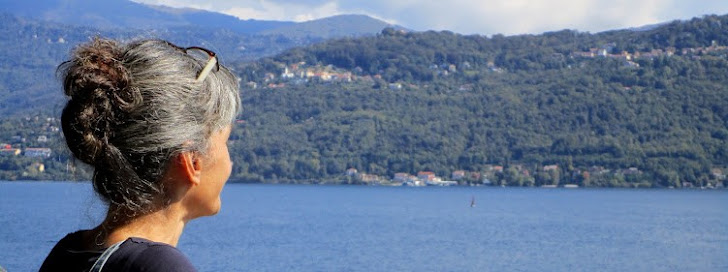
"The basic unit for minds is the image, the image of a thing or of what a thing does, or what the thing causes you to feel; or the image of what you think of the thing; or the image of the words that translate any and all of the above." António Damásio (2019). The Strange Order of Things. Photo by Monica Pinheiro, free to use if you respect the license CC BY-NC-SA (CC).


May 13, 2023

May


"A warning is not a prophecy; the former assumes that we have choices and cautions us about the consequences; the latter operates on the basis of a fixed future (...)" Rebecca Solnit (2022). Orwell's Roses. Photo by Monica Pinheiro free to use if you respect the license CC BY-NC-SA ( CC ).

May 12, 2023

May

"While options range from incremental changes to fundamental reform, science provides a clear warning about continuing on our current path." in Beyond growth: pathways towards sustainable prosperity in the EU, document for the European 'Beyond Growth' conference taking place next week (15 to 17 May, 2023), prepared by the Parliament, Directorate-General for Parliamentary Research Services, presenting "the economic and socio-ecological challenges facing today's society and offers a reflection on possible transition pathways and associated tools to move beyond growth in EU policies. The focus is the European Union and its Member States, with the global context integrated where relevant for understanding the status quo and discussing options." See also the brief «'beyond growth': concepts and challenges» (May 2023).

Photo by Monica Pinheiro, free to use if you respect the license CC BY-NC-SA ( CC ).